1. Adding GST
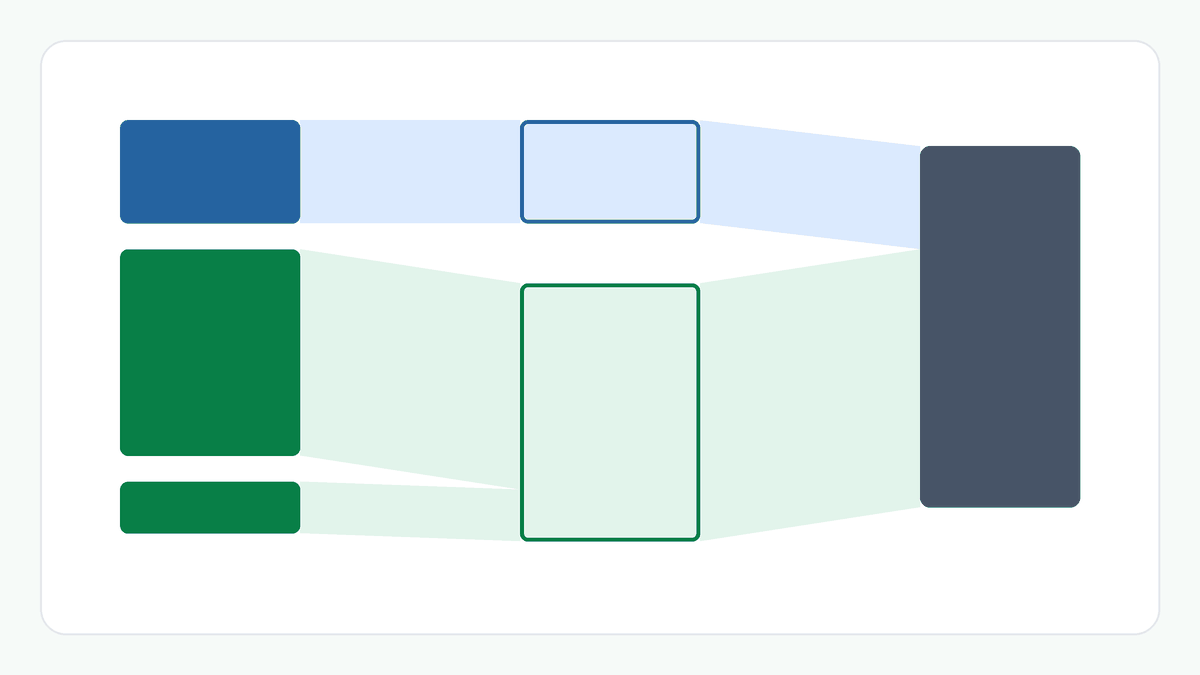
Start with an amount before GST. The GST is the rate applied to that amount, and the amount with GST is the two added together.
Take ₹1,000 and an example rate of 18%. The GST is ₹180.00, and the amount with GST is ₹1,180.00.
2. Removing GST
Now start from the other end: ₹1,180 that already includes GST at 18%. A common shortcut is to take 18% off. That gives ₹1,180 less ₹212.40, or ₹967.60, which is not the ₹1,000.00 you started from.
The correct way is to divide by one plus the rate. ₹1,180 divided by 1.18 is ₹1,000.00, and the GST inside the total is ₹180.00. The two always add up to the amount you entered, to the paisa.
3. Why the Share Is Smaller
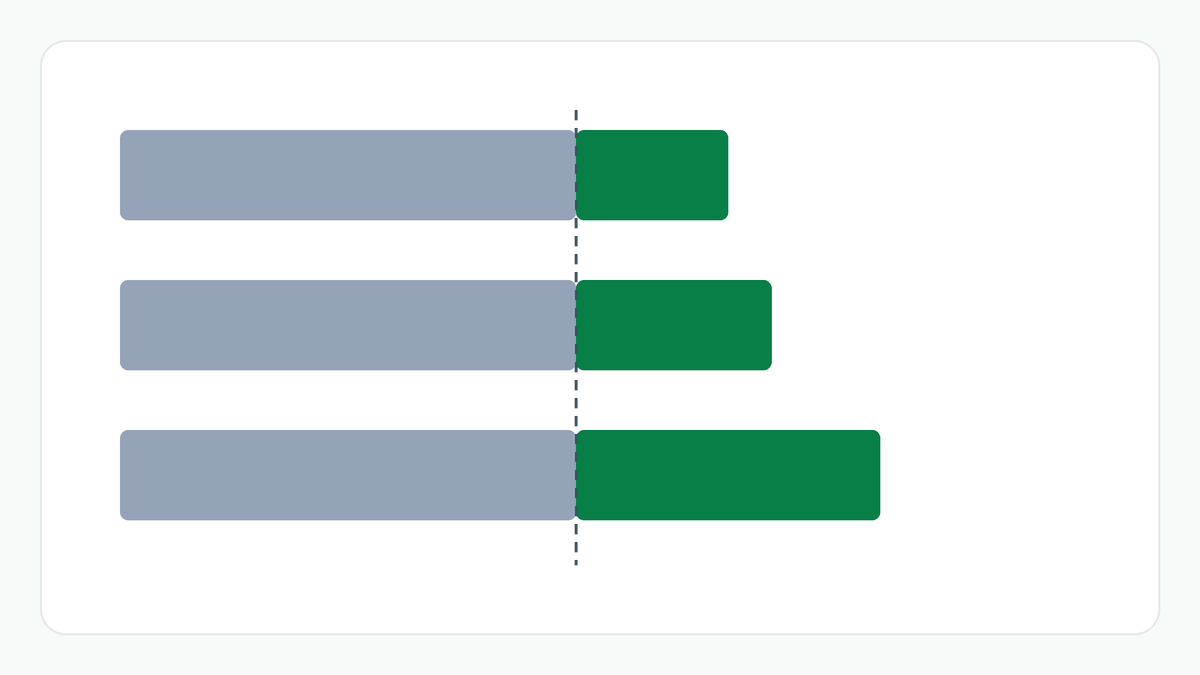
The rate applies to the amount before GST, which is the smaller number. The same ₹180.00 measured against the larger amount with GST is a smaller share: ₹180.00 is 18% of ₹1,000.00 but 15.25% of ₹1,180.00.
That is why subtracting the rate from the total takes off too much. It treats the GST as 18% of ₹1,180, which is ₹212.40, when it is only 15.25% of it.
4. The Share at Other Rates
The share of the final amount is the rate divided by 100 plus the rate. At an example rate of 5% it is 4.76%, at 12% it is 10.71%, at 18% it is 15.25% and at 28% it is 21.88%.
The higher the rate, the bigger the gap between the rate and the share, and the more the shortcut gets wrong. These are examples of rates you might enter, not a list of what applies.
5. What This Does Not Tell You
The figures use the rate you enter. They do not decide whether GST applies, which rate applies to a product or a service, or how anything is classified.
Each amount is rounded to the nearest paisa, half up. Place of supply, reverse charge, input tax credit, cess, returns and e-invoicing are not included. This is a calculation from the numbers you enter, not tax advice.
Example: ₹1,000 at an Example Rate of 18%
Adding: ₹1,000.00 before GST, ₹180.00 of GST, ₹1,180.00 with GST. GST as a share of the final amount: 15.25%.
Removing from ₹1,180: ₹1,000.00 before GST and ₹180.00 of GST, not ₹967.60.
The Bigger Picture
A rate is a share of the amount before GST. Whenever the starting point is a total that already includes GST, that is a different base, and the arithmetic has to change with it.
Things to Consider
- Check whether your amount is before GST or includes it before you start.
- Do not subtract the rate from a total that includes GST.
- Remember that the share of the final amount is smaller than the rate.
- Remember that the rate is the one you enter, and that this is not tax advice.
Try the GST Calculator
Choose Add GST or Remove GST, enter an amount and a rate, and see the amount before GST, the GST, the amount with GST and the GST as a share of the final amount.
Frequently Asked Questions
Why is the GST a smaller share of the amount with GST?
Because the rate applies to the amount before GST, which is the smaller number. The same GST measured against the larger total is a smaller share: ₹180 is 18% of ₹1,000 and 15.25% of ₹1,180.
How do I take GST out of a total correctly?
Divide the total by one plus the rate. ₹1,180 divided by 1.18 is ₹1,000.00, and the GST is the ₹180.00 that is left.
Does adding GST and then removing it give the same amount back?
In testing, yes. The calculator was checked on every amount from ₹0.01 to ₹2,000.00 at seven different rates, and each came back exactly. That is the range that was checked.
How were the figures calculated?
With the GST Calculator, using ₹1,000 and an example rate of 18% in Add GST mode, and ₹1,180 at the same rate in Remove GST mode. You can reproduce them by entering the same values.
Related Articles
Explore more practical guides from ToolZen Hub.