1. What a Step-Up Does
With a fixed SIP you invest the same amount every month. With a step-up you raise it by a percentage once a year, starting in the 13th month. The first year stays at your starting amount.
A 10% step-up on a ₹10,000 SIP means ₹10,000 a month in year 1, ₹11,000 in year 2, ₹12,100 in year 3, and so on, rising to about ₹37,975 a month in year 15.
2. Fixed Against Stepped
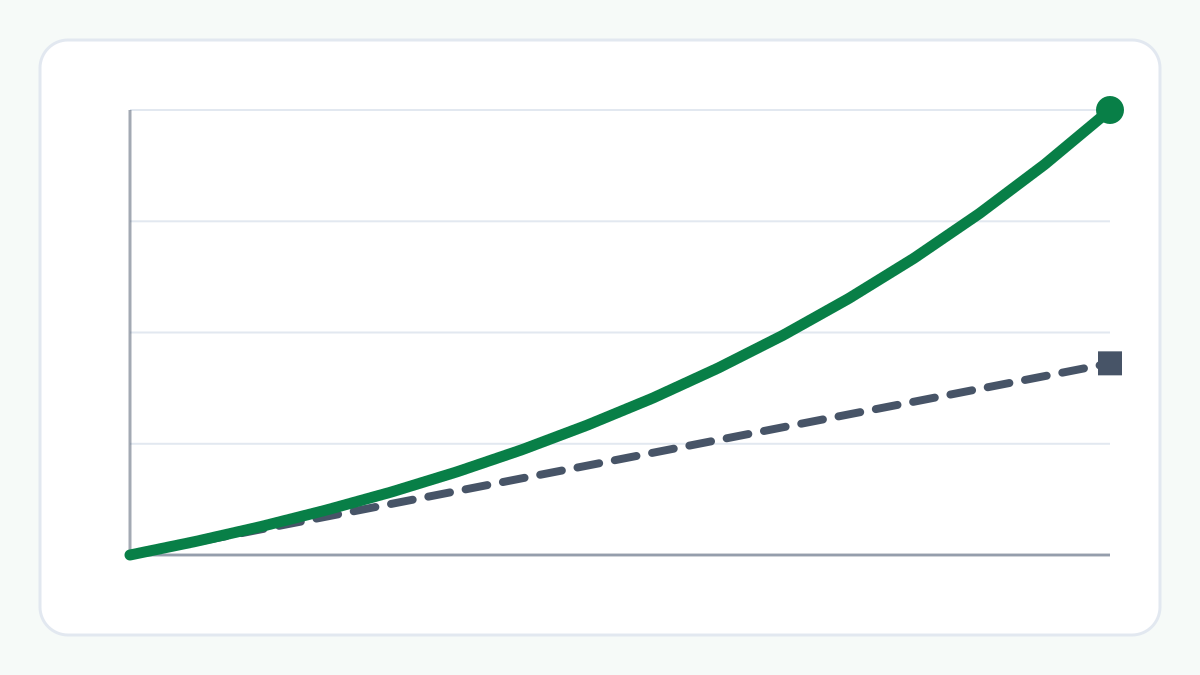
Take ₹10,000 a month for 15 years at an assumed 10% a year. With a fixed SIP you invest ₹18,00,000 and the estimated value is about ₹41,79,243.
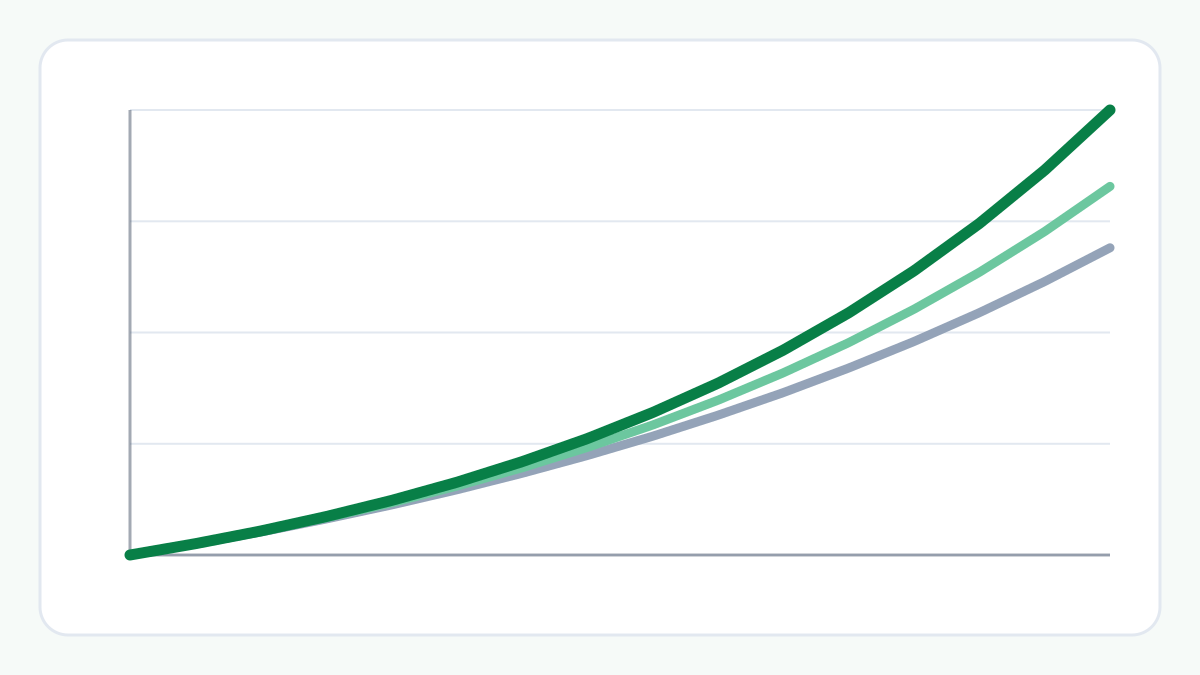
With a 5% yearly step-up you invest about ₹25,89,428 and the estimated value is about ₹54,99,931, with the monthly SIP reaching about ₹19,799. With a 10% yearly step-up you invest about ₹38,12,698 and the estimated value is about ₹74,37,840.
3. More Money, Not Just More Growth
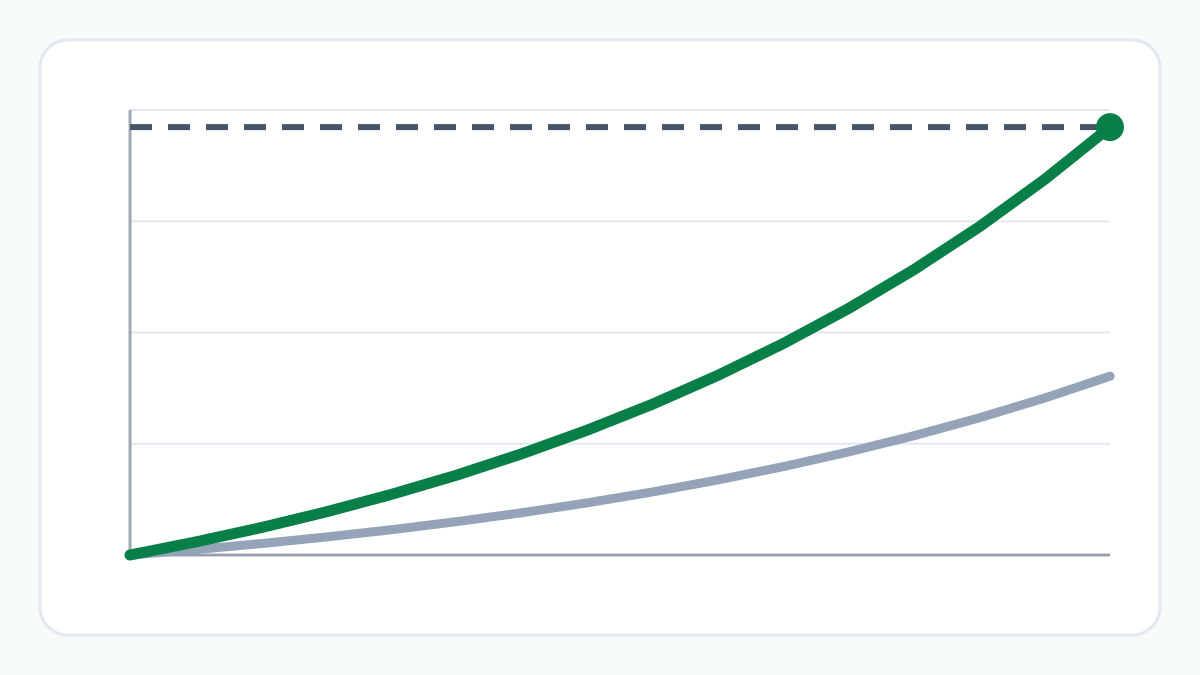
It is easy to read a larger estimated value as the step-up working harder. Most of the difference is simply more money going in. The 10% step-up invests about ₹20,12,698 more than the fixed SIP.
Measured against the money invested, the estimated value is 2.32 times with a fixed SIP, about 2.12 times with a 5% step-up and about 1.95 times with a 10% step-up. The step-up raises the estimated value, but each rupee invested later has less time to grow, so each rupee invested is estimated to become less.
4. What This Does Not Tell You
A step-up assumes your income and other commitments allow a larger instalment every year. Whether that fits your circumstances is for you to judge; this guide does not say what you should do.
The figures use an assumed return of 10% a year, which is an example, not a forecast. Real returns can be lower, and can be negative, and investments are subject to market risk. Taxes, fund charges, exit loads and inflation are not included.
Example: ₹10,000 a Month for 15 Years at an Assumed 10%
Each SIP is invested at the start of the month, the annual return is divided by 12 each month, and the step-up is applied from the 13th month and every 12 months after.
Fixed SIP: ₹18,00,000 invested, an estimated value of about ₹41,79,243, and a monthly SIP of ₹10,000 throughout.
5% yearly step-up: about ₹25,89,428 invested, an estimated value of about ₹54,99,931, and a monthly SIP of about ₹19,799 in the last year.
10% yearly step-up: about ₹38,12,698 invested, an estimated value of about ₹74,37,840, and a monthly SIP of about ₹37,975 in the last year.
The Bigger Picture
A step-up changes the projection mainly by changing how much you put in. Comparing a fixed and a stepped plan side by side shows how much of a larger result is more investment and how much is estimated growth.
Things to Consider
- Check that a rising instalment is realistic for your own circumstances.
- Compare the amount invested as well as the estimated value.
- Remember that the return is an assumption, not a forecast.
- Remember that taxes, charges and inflation are not in the projection.
- Remember that investments are subject to market risk.
Try the SIP Calculator
Use the Yearly Step-Up field to compare a fixed SIP with a stepped one, and see the monthly SIP rise year by year in the table.
Frequently Asked Questions
When does the step-up start?
In the 13th month. The first year stays at the starting amount, and the amount is raised again every 12 months after that.
Does a step-up make the investment better?
It raises the estimated value because you invest more. Whether it suits you depends on your circumstances. The projection does not say that it is better.
Why is the estimated value per rupee lower with a step-up?
The extra money goes in later, so it has less time to grow. The total is larger, but each rupee invested is estimated to become less.
How were the figures calculated?
With the SIP Calculator, using a standard monthly model: each SIP is invested at the start of the month and the annual return is divided by 12. You can reproduce them by entering the same values.
Related Articles
Explore more practical guides from ToolZen Hub.