How a SIP Grows: Your Investment vs Estimated Growth
See how a SIP projection splits into what you invest and the estimated growth, year by year, on one worked example.
Estimate what a monthly SIP could grow to for a return you assume, with a yearly step-up, return scenarios and a target.
Enter what you plan to invest each month and the return you want to assume. Results update as you type.
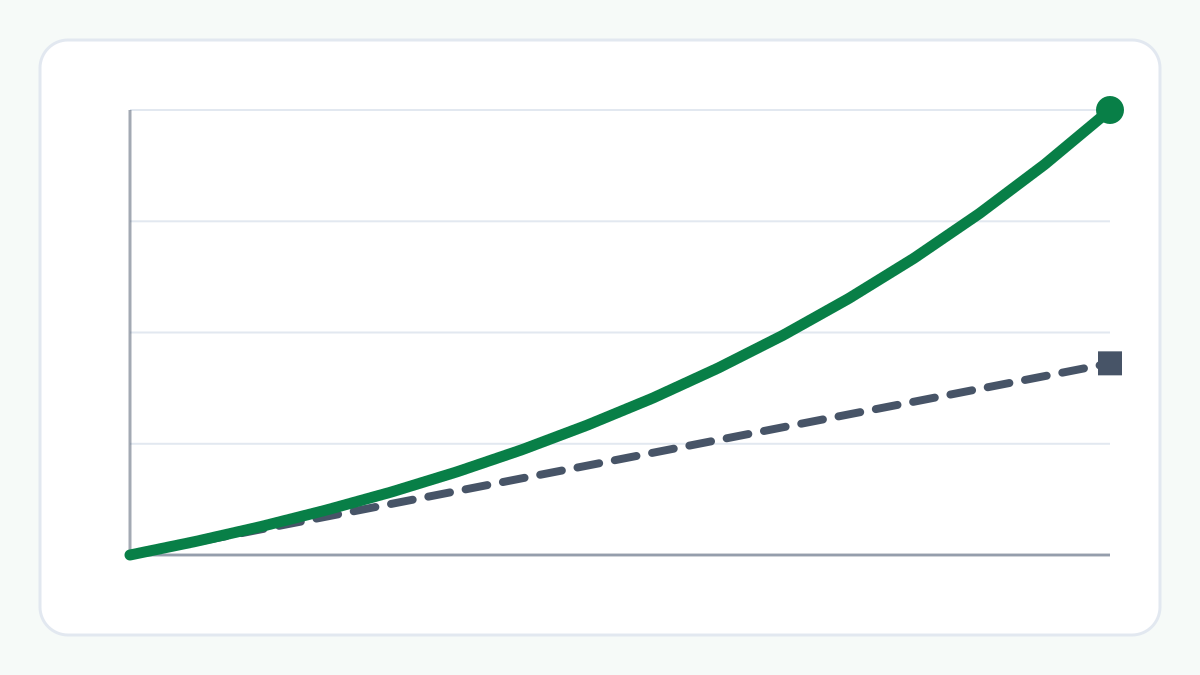
Your money and estimated growth are different things. The total invested is what you put in. The estimated growth is what the return you assume would add, so it moves whenever the assumption does.
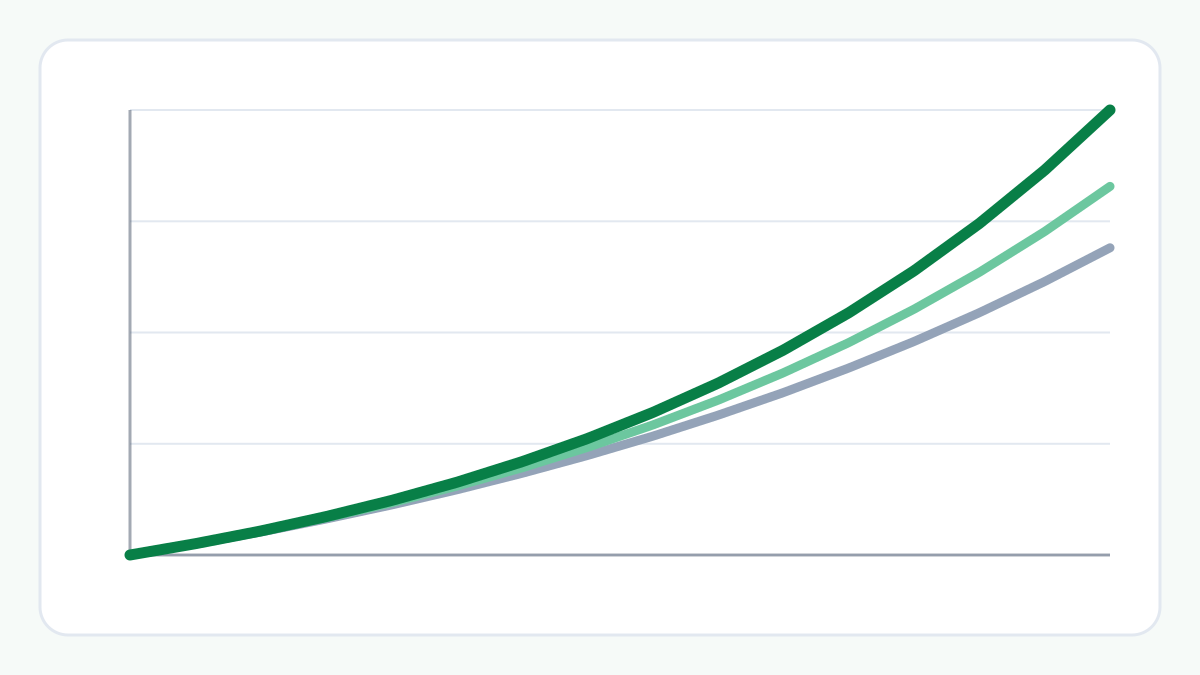
One return is not an answer. The scenarios show the same plan at a lower and a higher return, so you can see how much the result depends on the number you chose.
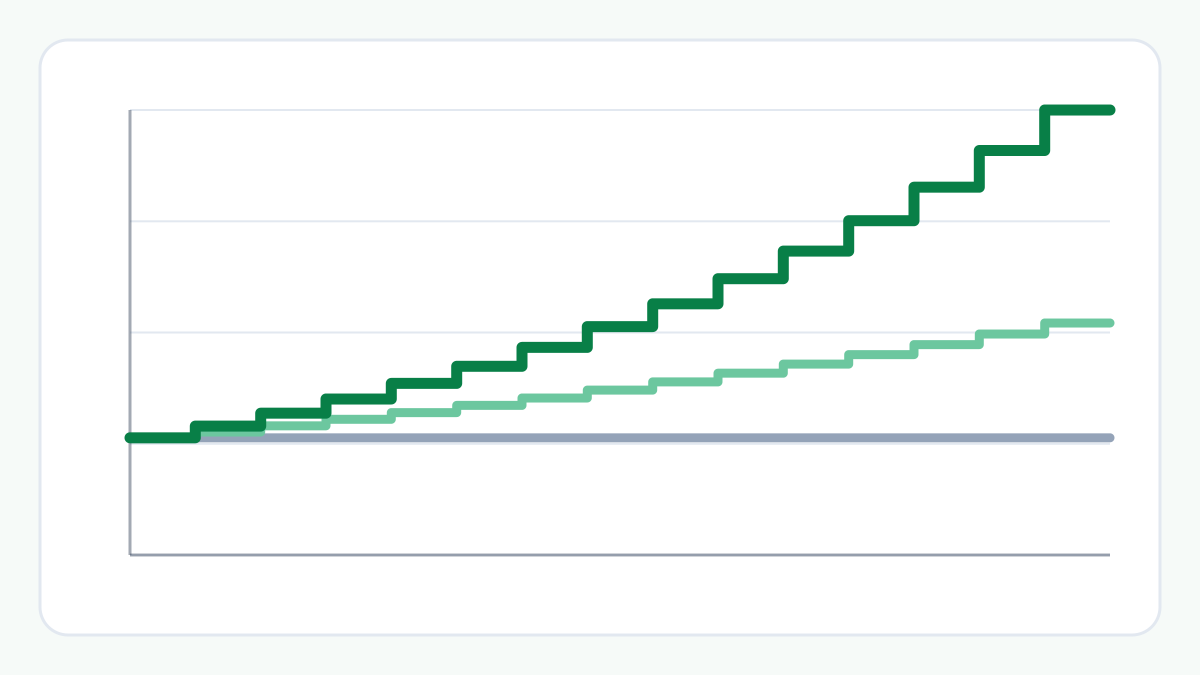
A step-up changes more than it looks. Raising the SIP a little each year adds to both what you invest and what the plan is estimated to reach.
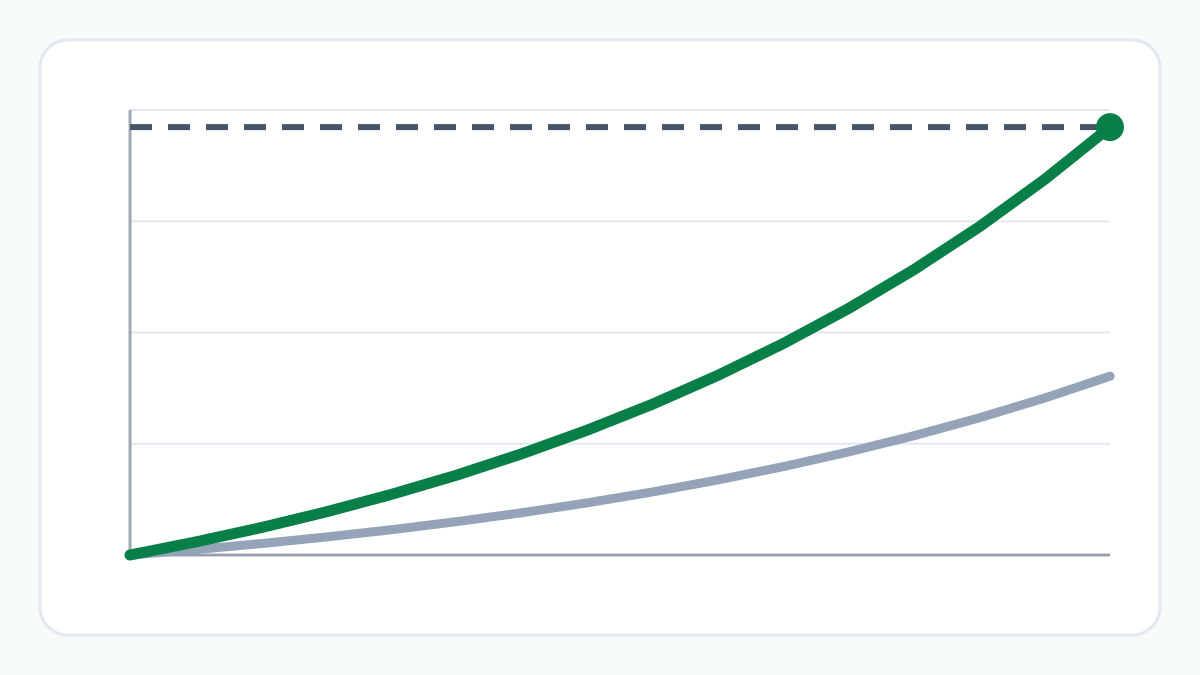
A target turns it into a question. If you enter one, the calculator shows whether the plan may reach it and the starting SIP that would be needed under the same assumptions.
This is a projection for understanding, not a forecast, not a guarantee and not investment advice. Investments are subject to market risk, and ToolZen Hub does not recommend any investment. See the disclaimer.
Take ₹10,000 a month, an assumed return of 10% a year and 15 years. You would invest ₹18,00,000 and the estimated value would be ₹41,79,243, of which ₹23,79,243 is estimated growth. If the return you assume is 8% or 12% instead, the estimated value is ₹34,83,451 or ₹50,45,760. If you raise the SIP by 10% every year you would invest ₹38,12,698 and the estimated value would be ₹74,37,840. To aim for ₹1,00,00,000 at 10%, the starting SIP would need to be about ₹23,928 a month, or about ₹13,445 with a 10% yearly step-up.
Each month, the SIP is added and the balance then grows by one month of the assumed return:
balance = (balance + SIP) × (1 + r)
r is the assumed annual return divided by 12. The estimated value is the balance after the last month. The total invested is the sum of all the SIPs, and the estimated growth is the difference. With a step-up, the SIP is raised in the 13th, 25th and every later 12th month.
Because every SIP scales with the starting amount, the starting SIP a target needs is the target divided by the value that a starting SIP of ₹1 would reach under the same return, period and step-up.
It is a number you choose to see what a plan could look like. It is not a prediction and not a promise. Actual returns can be lower, higher or negative.
A single return can look like the answer. Showing the same plan at a lower and a higher return makes it clear how much the estimated value depends on the assumption.
A SIP whose monthly amount is raised by a fixed percentage once a year. A 10% step-up on ₹10,000 means ₹10,000 in year 1, ₹11,000 in year 2 and ₹12,100 in year 3.
The projection scales with the starting SIP, so the starting SIP needed is the target divided by what a ₹1 SIP would reach with the same return, period and step-up. It is an estimate based on your assumptions.